
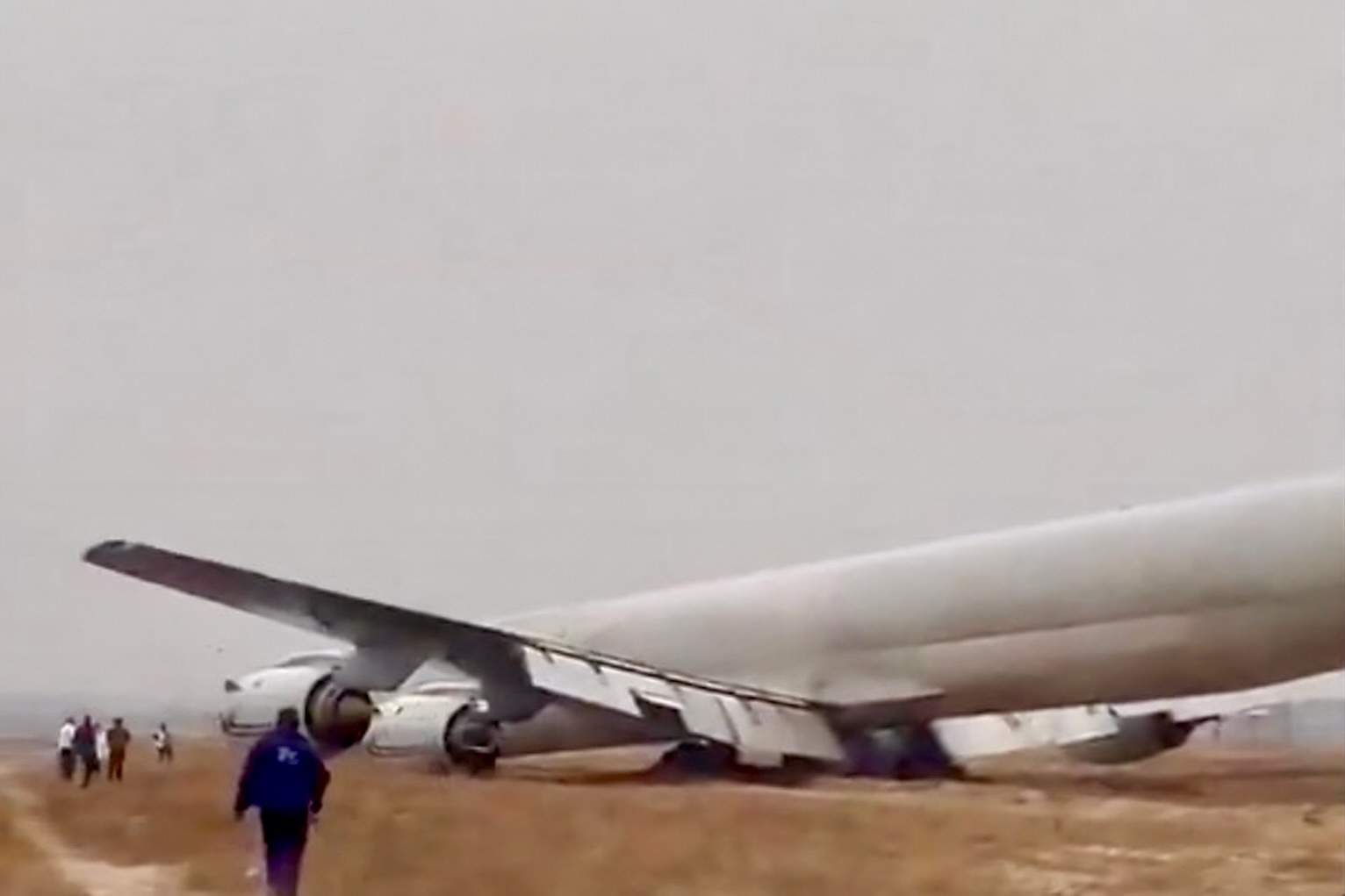
A Douglas DC-8-73CF freighter registered 9S-AJO and operated by Trans Air Cargo Service suffered a nose gear collapse after veering off Runway 24 at N’Djili International Airport (FIH) in Kinshasa, Democratic Republic of the Congo, on September 8, 2026. The four-engine jet ran left off the runway and came to a stop on soft ground in the adjacent grass resting nose-down.
The Democratic Republic of the Congo’s Bureau Permanent d’Enquêtes d’Accidents et Incidents d’Aviation (BPEA) officially classified the runway excursion as an accident and dispatched investigators to the scene. The investigative agency instructed that the aircraft and all related physical evidence be preserved at the airport until safety personnel can complete their examinations.
Meteorological reports from around the time of the event indicated reduced visibility and mist in the Kinshasa area. However, authorities have not confirmed whether weather conditions contributed to the excursion. Airport imagery showed structural impact around the front landing gear, and officials have not determined whether the 56-year-old aircraft can be repaired.
The aircraft involved was originally constructed as a DC-8-63 model under the "Super 60" series before undergoing a conversion to DC-8-73 standards, which installed CFM56 turbofan engines. According to fleet database records, the jet represented the only active aircraft in Trans Air Cargo Service's commercial fleet and was among the last remaining operational DC-8 freighters worldwide.
First entering commercial service in 1959 with Delta Air Lines and United Airlines, the DC-8 was developed by Douglas as a direct competitor to the Boeing 707. Production ended in 1972 after 556 units were built. Other late-stage operational DC-8s included an aircraft registered OB-2231P flown by Skybus Jet Cargo in Peru, while NASA retired its research laboratory unit in 2024 and Samaritan's Purse retired its last US-registered example in 2025.
