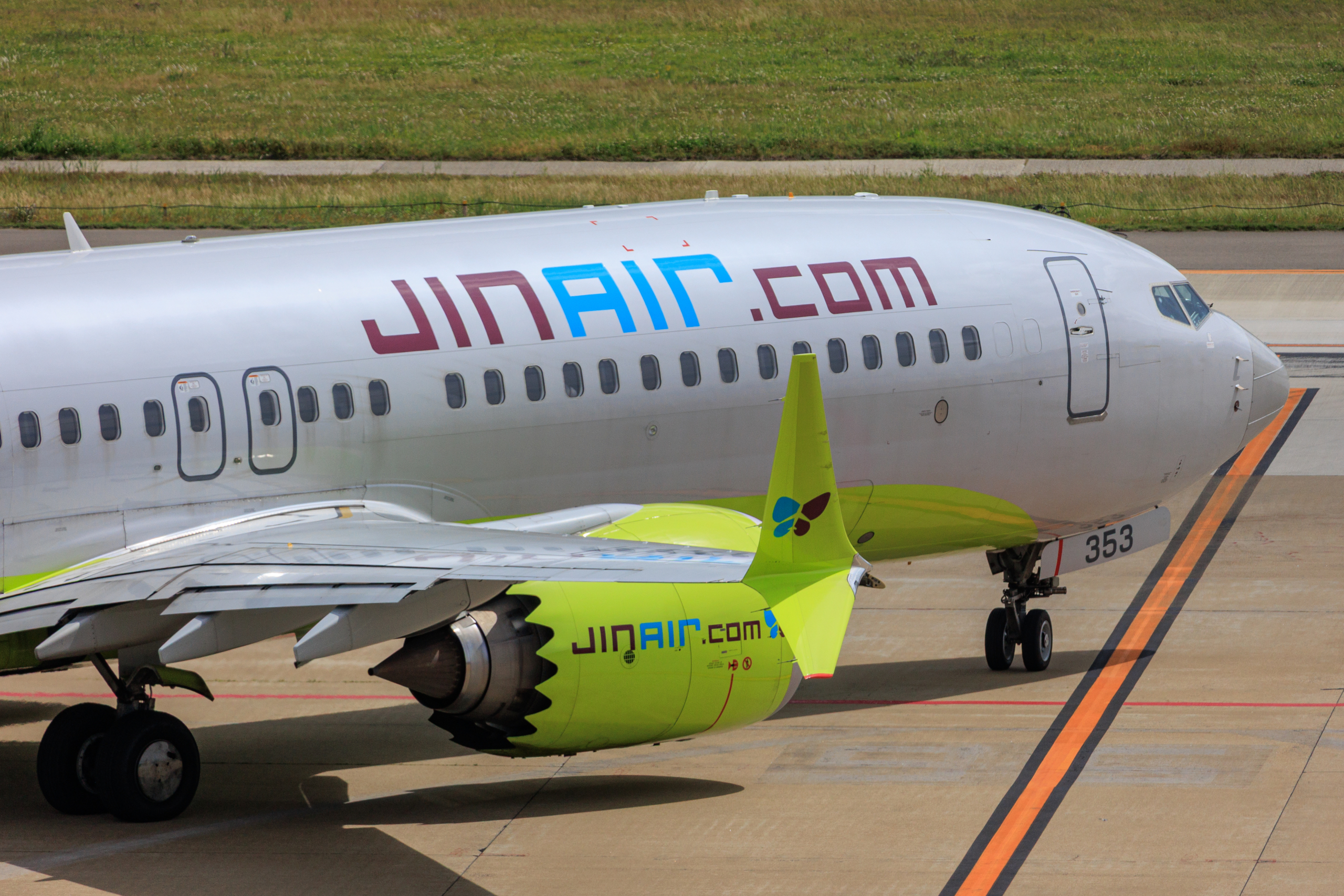
South Korean low-cost carriers Jin Air, Air Busan, and Air Seoul reached an agreement on 21 August 2026 to merge into a single airline operating under the Jin Air brand. Subject to necessary shareholder and regulatory approvals, the integrated budget carrier is scheduled to officially launch combined operations on 17 March 2027.
The three-way budget airline integration forms part of a broader restructuring across South Korea's commercial aviation sector. The major merger between parent companies Korean Air and Asiana Airlines is scheduled to take effect in December 2026, bringing Jin Air, Air Busan, and Air Seoul under unified corporate ownership.
Based on fleet evaluations at the end of 2025, the combined airline is expected to operate a fleet of 59 aircraft, consisting of 32 aircraft from Jin Air, 21 from Air Busan, and six from Air Seoul. This fleet size will position the combined entity ahead of domestic low-cost competitors Jeju Air with 45 aircraft and T'way Air with 47 aircraft, creating South Korea's largest budget carrier.
Each of the three carriers contributes distinct hub strengths to the consolidated network. Jin Air maintains a major presence at Seoul-Incheon Airport (ICN), Air Seoul operates an international route network centered on the Seoul metropolitan area, and Air Busan plays a primary role at Busan Gimhae International Airport (PUS) serving the southeastern region. The airlines plan to connect Incheon and Busan operations while strengthening international flights from regional hubs.
For air travelers, the operational merger will consolidate customer-facing services, with reservation platforms, ticketing systems, mobile applications, and airport check-in processes expected to be unified under the Jin Air brand. The integrated management plans to reorganize routes and schedules based on market demand, enabling more flexible deployment of aircraft across the expanded domestic and international network.
