


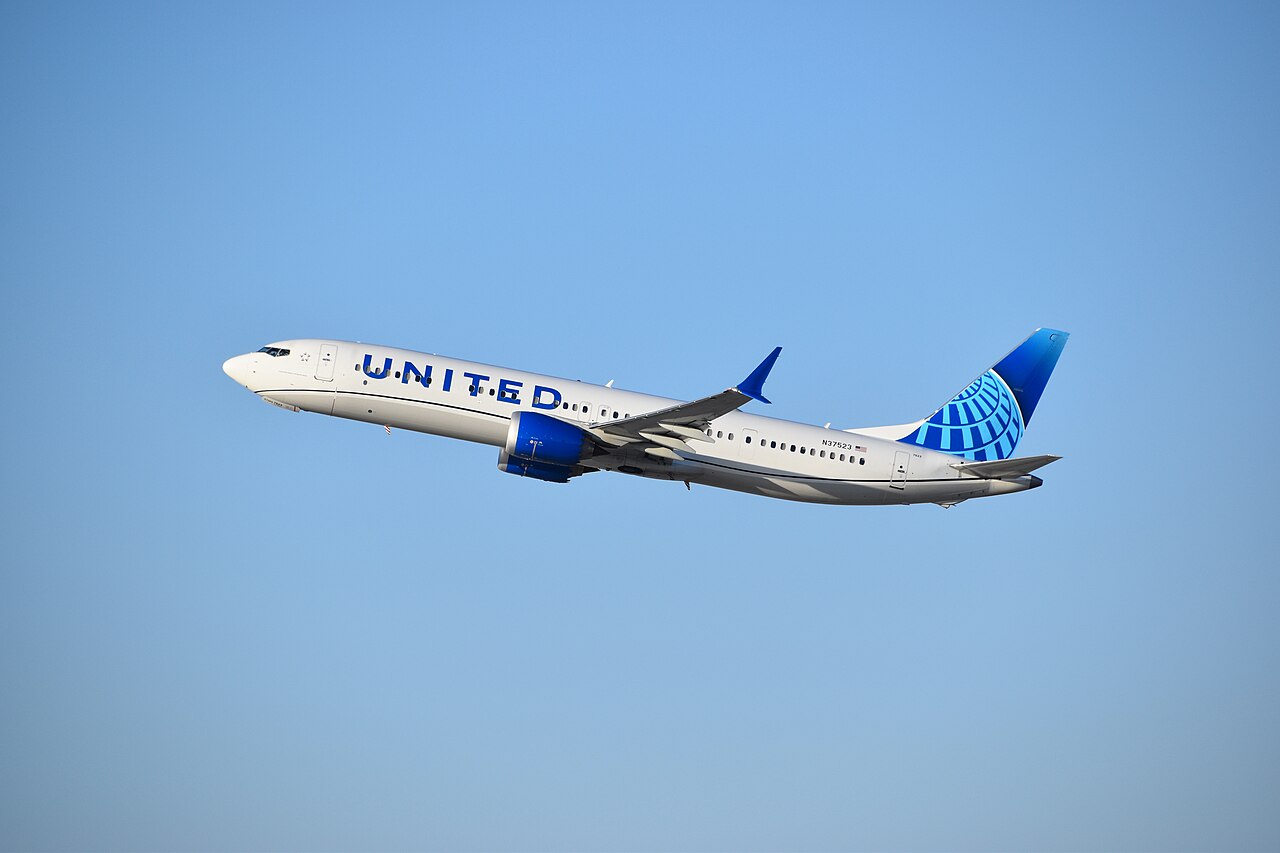
United Airlines is one of the world's largest operators of the Boeing 737 MAX family, with fleet data from ch-aviation showing it currently has 123 737 MAX 8s and 188 737 MAX 9s, and 35 more 737 MAX 9s still to be delivered as its mainline fleet modernises. Comparing the airline's 2027 schedules with those for 2026, using data from Cirium, an aviation analytics company, United has taken the MAX off no fewer than 27 international routes, spread across six hubs: two on the East Coast, two on the West Coast and two in the centre of the US.
On the East Coast, Newark has lost MAX flights on just two international routes, to Piarco International Airport (POS) in Trinidad and to Vancouver in Canada. From Washington Dulles (IAD), Vancouver is one of three Canadian destinations to lose United MAX flights, along with Calgary and Toronto Pearson, while MAX flights to Barbados, Liberia in Costa Rica and Nassau in the Caribbean are also ending. In the centre of the country, Chicago O'Hare (ORD) has lost four routes — Montreal, Vancouver, Belize City and Nassau — and Houston, the most affected hub, has lost eight: Calgary and Toronto, the Mexican destinations of Cozumel, San Jose del Cabo and Puerto Vallarta, and the Caribbean destinations of Kralendijk on Bonaire, George Town on Grand Cayman and Santo Domingo.
On the West Coast, Los Angeles has lost MAX flights to Puerto Vallarta, Toronto Pearson and Vancouver, while San Francisco has lost Vancouver, Calgary and Panama City's Tocumen International Airport (PTY). United will still retain considerable MAX networks from both West Coast hubs: in the 12 months to October 2027 it has planned 26,868 MAX flights from San Francisco and 11,132 from Los Angeles. United's MAX 9s have 20 domestic first/business class recliners and 159 economy seats (45 or 48 with extra legroom), while the smaller MAX 8 seats 16 in domestic first/business class and 150 in economy (54 with extra legroom).