


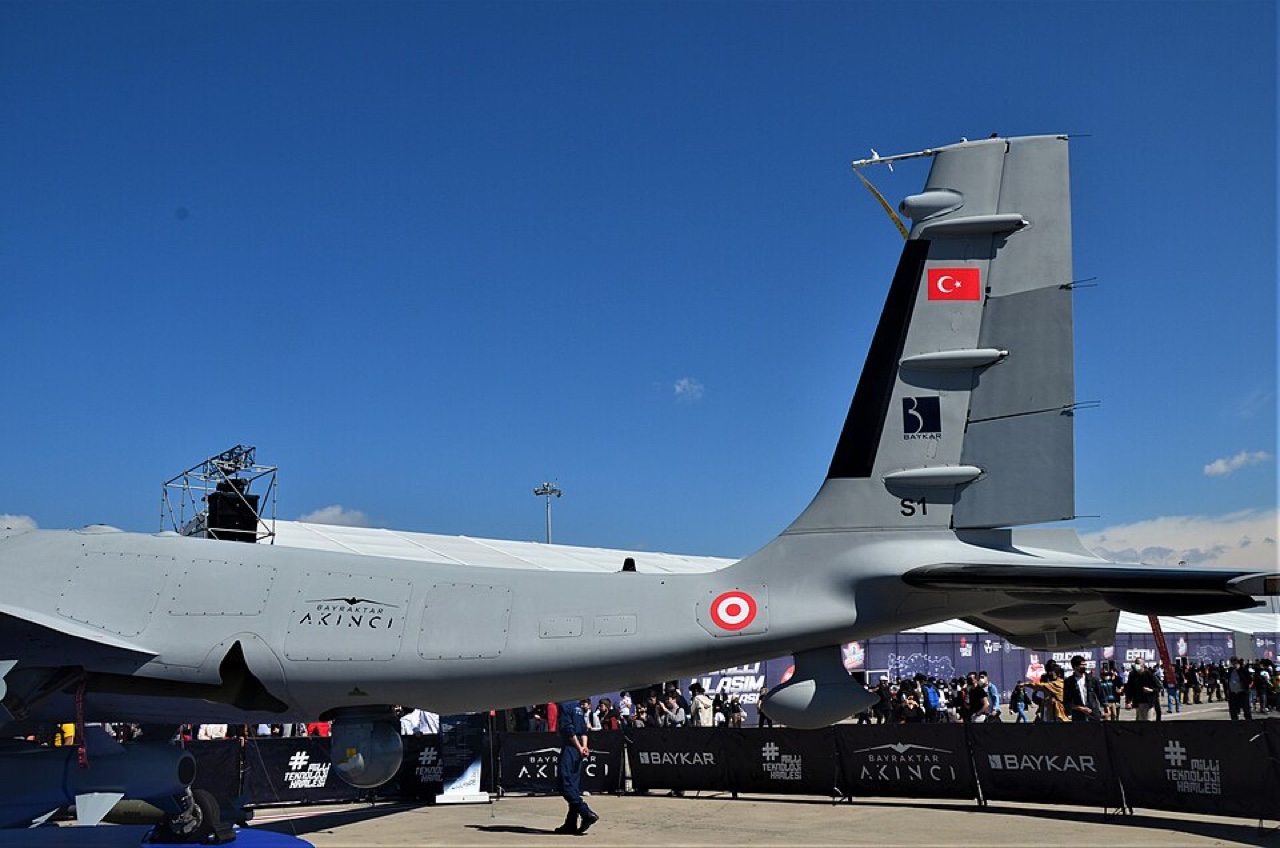
Baykar's Bayraktar AKINCI unmanned combat aerial vehicle released Roketsan's ORKA next-generation lightweight anti-submarine torpedo over the Gulf of Saros on November 22, in the first reported torpedo release from an unmanned aircraft. According to Anadolu Agency, the AKINCI took off from the Çorlu Flight Training and Test Center in Tekirdağ carrying the torpedo beneath its wing, released it over the designated area in the northeastern Aegean Sea, and returned to base. The torpedo separated safely from the aircraft and entered the water at the designated point.
The test did not establish a successful engagement against an underwater target. Taiwan's Ministry of National Defense, citing Army Recognition, reported that the torpedo did not hit the simulated underwater target, while Army Recognition noted that the trial demonstrated a critical technical foundation for integrating torpedo weapons with unmanned combat aircraft. The result is therefore a milestone in platform-weapon integration rather than a demonstration of a complete anti-submarine engagement.
ORKA is a fully autonomous lightweight torpedo with an active and passive acoustic seeker and onboard guidance, with a range of 15 kilometres, a diameter of 275 millimetres and a weight of about 220 kilograms. The AKINCI offers around 20 hours of endurance, a 1,500-kilogram payload and satellite communications. Turkey is also testing related unmanned anti-submarine concepts: in September, a TB-3 drone launched from the amphibious assault ship TCG Anadolu dropped two sonobuoys, and future trials are expected to pair reconnaissance and strike drones with crewed aircraft in a networked system.